
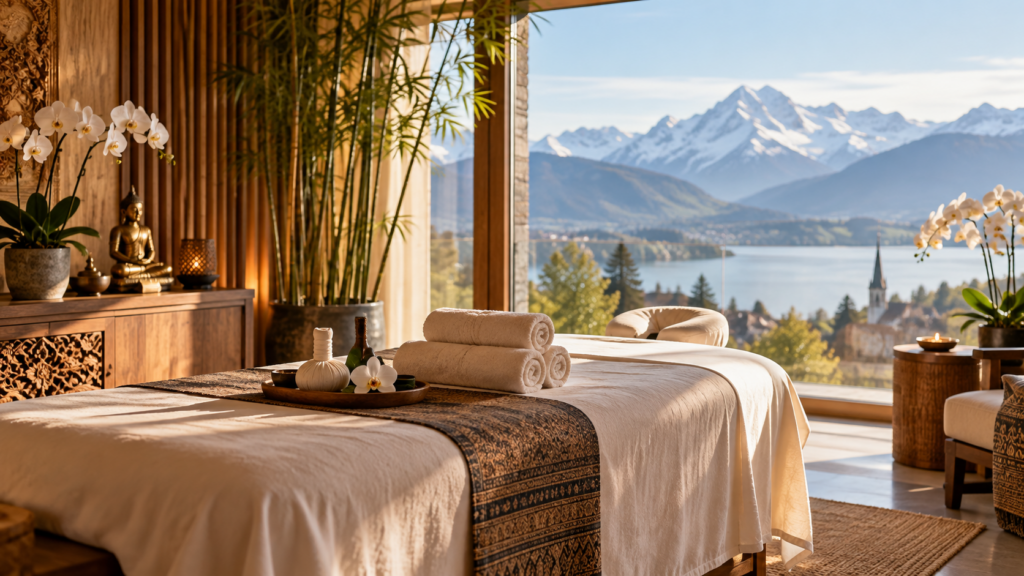
Anyone planning to open a Thai massage or wellness massage studio in Switzerland needs to clarify a number of legal and organizational issues. These include in particular permits, legal structure, AHV/social security status, VAT, staff, work permits, insurance and whether the chosen premises may legally be used for the intended business.
An especially important point is the distinction between wellness massage and medical massage. A Thai massage or wellness service focused on relaxation, wellbeing and general regeneration is treated differently from a service that aims to treat pain, illness or injuries or makes corresponding therapeutic claims.
Even if a pure wellness studio does not require a health-profession licence, many general legal obligations still apply. These include the legal form of the business, AHV status, VAT, employment relationships, residence and work authorization, tenancy and building law, liability insurance, hygiene and data protection.
Before signing a long-term lease, it should also be checked whether the premises may actually be used as a massage studio and whether renovations, customer traffic or signage may trigger additional approval requirements.
Marketing also requires care. Terms such as “therapy”, “pain treatment” or “recognized by health insurance” should only be used if the relevant professional and legal requirements are actually met.
Free Practical Guide
Nomadlaw has prepared a detailed Guide to Opening a Thai or Wellness Massage Studio in Switzerland. It provides a practical overview of the main legal issues and is available in German and Thai.
Practical Guide in German download here
Thai Guide download here
The Guide is intended as general information only and does not replace individual legal advice.